第2章 GOCOシステムの連邦政府研究開発活動における位置付け
The GOCO system in US Federally-funded research
 Contents
 Summary
The GOCO system
of laboratory management is well established and provides several advantages
2-1 Definition and context
 Contents
 Laboratories employing
the GOCO system receive funding from the government, are owned by the government,
but are operated under contract by non-government entities
Laboratories employing
the GOCO system receive funding from the government, are owned by the government,
but are operated under contract by non-government entities
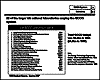 22 of the larger
US national laboratories employ the GOCO system
22 of the larger
US national laboratories employ the GOCO system
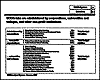 GOCO labs are administered
by corporations, universities and colleges, and other non-profit institutions
GOCO labs are administered
by corporations, universities and colleges, and other non-profit institutions
 The GOCO concept
is intimately connected with that of FFRDCs (Federally Funded Research and
Development Centers)
The GOCO concept
is intimately connected with that of FFRDCs (Federally Funded Research and
Development Centers)
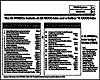 The 38 FFRDCs include
all 22 GOCO labs and a further 16 COCO labs
The 38 FFRDCs include
all 22 GOCO labs and a further 16 COCO labs
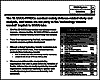 The 16 COCO FFRDCs
conduct mainly defense-related study and analysis, and hence are not party
to the ‘technology transfer conduit’ implicit in GOCO labs
The 16 COCO FFRDCs
conduct mainly defense-related study and analysis, and hence are not party
to the ‘technology transfer conduit’ implicit in GOCO labs
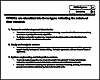 FFRDCs are classified
into three types reflecting the nature of their research
FFRDCs are classified
into three types reflecting the nature of their research
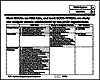 Most GOCOs are
R&D labs, and most COCO FFRDCs are study and analysis centers administered
by non-profit organizations
Most GOCOs are
R&D labs, and most COCO FFRDCs are study and analysis centers administered
by non-profit organizations
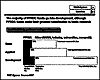 The majority of
FFRDC funds go into development, although FFRDC funds make their greatest
contribution to basic research
The majority of
FFRDC funds go into development, although FFRDC funds make their greatest
contribution to basic research
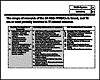 The scope of research
of the 24 R&D FFRDCs is broad, and 15 are at least research
The scope of research
of the 24 R&D FFRDCs is broad, and 15 are at least research
2-2 History and development
 Contents
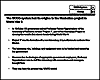 The GOCO system
had its origins in the Manhattan project in World War II
The GOCO system
had its origins in the Manhattan project in World War II
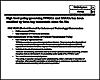 High level policy
governing FFRDCs and GOCOs has been modified by three key documents since
the 50s
High level policy
governing FFRDCs and GOCOs has been modified by three key documents since
the 50s
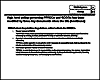 High level policy
governing FFRDCs and GOCOs has been modified by three key documents since
the 50s (continued)
High level policy
governing FFRDCs and GOCOs has been modified by three key documents since
the 50s (continued)
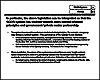 In particular,
the above legislation can be interpreted as that the GOCO system has evolved
towards more market-oriented principles and government / private sector
partnership
In particular,
the above legislation can be interpreted as that the GOCO system has evolved
towards more market-oriented principles and government / private sector
partnership
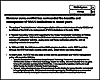 However some conflict
has surrounded the benefits and management of GOCO institutions in recent
years
However some conflict
has surrounded the benefits and management of GOCO institutions in recent
years
2-3 Benefits and weak points
 Contents
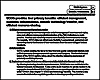 GOCO provides four
primary benefits: efficient management, academic independence, smooth technology
transfer, and efficient resource sharing
GOCO provides four
primary benefits: efficient management, academic independence, smooth technology
transfer, and efficient resource sharing
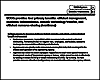 GOCO provides four
primary benefits: efficient management, academic independence, smooth technology
transfer, and efficient resource sharing (continued)
GOCO provides four
primary benefits: efficient management, academic independence, smooth technology
transfer, and efficient resource sharing (continued)
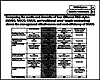 Comparing the merits
and demerits of four different R&D styles (GOGO, GOCO, COCO, and traditional
arms’ length contracting) shows the management effectiveness and cost-efficiency
of GOCO
Comparing the merits
and demerits of four different R&D styles (GOGO, GOCO, COCO, and traditional
arms’ length contracting) shows the management effectiveness and cost-efficiency
of GOCO
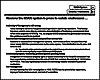 However the GOCO
system is prone to certain weaknesses...
However the GOCO
system is prone to certain weaknesses...
2-4 Case Studies
 Contents
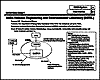 Idaho National
Engineering and Environmental Laboratory (INEEL)
Idaho National
Engineering and Environmental Laboratory (INEEL)
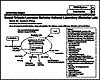 Ernest Orlando
Lawrence Berkeley National Laboratory (Berkeley Lab)
Ernest Orlando
Lawrence Berkeley National Laboratory (Berkeley Lab)
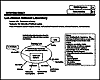 Los Alamos National
Laboratory
Los Alamos National
Laboratory